Bilge & Fire System
We needed to develop a bilge system for the new XPM-78 from Naval Yachts. Rather than write a document about bilges in general, let us just look at this specific instance and the design decisions made.
Firstly though, some limitations apply. The yacht is built to UK Marine Coastguard Agency Category (0) for unrestricted travel worldwide up to 80 degrees latitude in summer months. This is not a Class Code as the vessel is too small, but it's basically the next best thing and quite rare to find in yachts 24m or so in size. These rules, in part, touch on the bilge system and general survivability. We need duplication, a manual option, and care in penetrating watertight bulkheads.
Full beam double bottom tanks protect three cabins and part of the engine room from a breach below the waterline. So the existence of traditional "bilges" is minimized. We also have tank edge drains that would catch leakage or condensation. These run at the intersections of the tank tops and hull sides.
So we have a need to:
- Remove small quantities of water from tank side drains. Big pumps are not good at this and leave too much residual liquid in the bilge that cannot pump. Instead, it sits there and starts smelling.
- Remove potentially larger quantities of water from the engine room and forepeak bilges in the event of internal or external damage.
- Satisfy UK MCA Code Requirement.
What we did was:
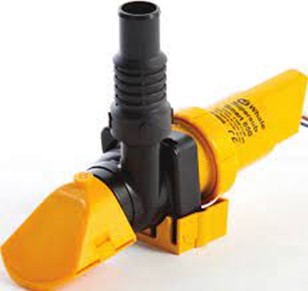
- Small condensate pumps (Whale) were used for each tank drain. These are made to fit in tight spaces and will pump the space dry (almost). They discharge directly overboard via the nearest sea chest.
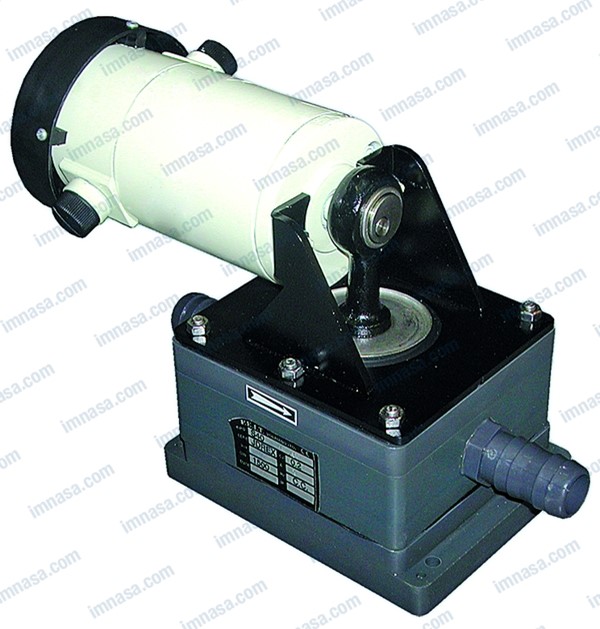
- We used a commercial pump (Feit) in the engine room, linked to each watertight compartment via a manifold and strainer. This is a positive displacement design and tolerant of small solids.
- Individual bilge lines lead to a manifold in the engine room. Suction valves are the none return type to prevent back-flooding, and bilge lines are marine-grade reinforced houses.
- We installed a large hand-operated bilge pump in parallel as a backup.
- The Feit bilge pump will also double as the emergency fire pump and salt water washdown pump.. This was facilitated by providing a sea suction valve from the sea chest to the pump inlet. By this means it is also possible to flush the pump and bilge system with clean sea water.
Now a word on monitoring. It is tempting, but not really necessary, to monitor everything. Instead, we have opted for a more considered and simplified approach.
- Each bilge has a commercial-grade damage-protected bilge float switch that will give a "high" and "high high" alarm.
- The float switch on the condensate pump will operate first, turning on the pump but not sounding any alarm. Should the pump fail, then water can run across to the other tank edge drain and be taken out from the other condensate pump.
- If both pumps fail, then we have the high alarm operate, then we can use the engine room bilge pump to evacuate the space and investigate the cause manually. This pump is larger than a typical retail bilge pump, and being positive displacement, it will pump a moderate volume of solids.
- Bilge spaces will ordinarily be pumped daily as part of the operating routine.
- For in-port use, unattended, the Feit pump will be set to evacuate the engine room and run automatically. This has a float trip and is always energized regardless of the general power systems.
So, in essence, the XPM-78 Explorer Yacht has a small economic system with built-in redundancy that reflects commercial rather than leisure craft practice. It is easy to operate and maintain whilst minimizing residual fluid in the bilges. It will handle large and small volumes and contaminated fluids. It's also very simple to monitor.
Whale pump for low volume condensate
Feit positive displacement DC Bilge Pump